最近在看knn算法,順便敲敲代碼。
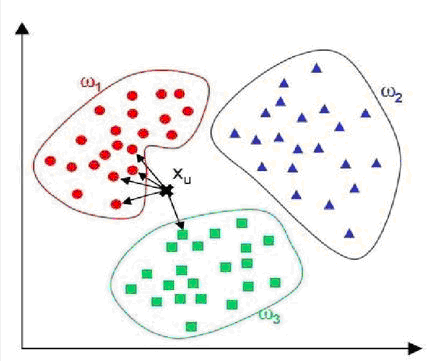
knn屬於數據挖掘的分類算法。基本思想是在距離空間裡,如果一個樣本的最接近的k個鄰居裡,絕大多數屬於某個類別,則該樣本也屬於這個類別。俗話叫,“隨大流”。
簡單來說,KNN可以看成:有那麼一堆你已經知道分類的數據,然後當一個新的數據進入的時候,就開始跟訓練裡的每個點求距離,然後挑出離這個數據最近的K個點,看看這K個點屬於什麼類型,然後用少數服從多數的原則,給新數據歸類。
該算法的示意圖,簡單明了:
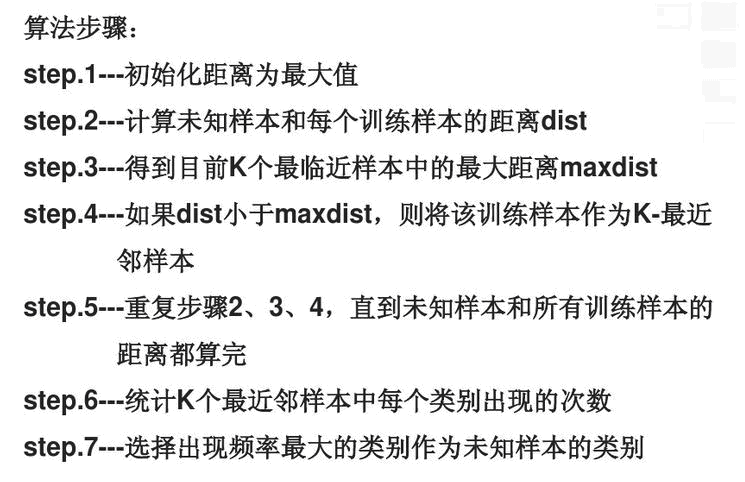
下面的算法步驟取自於百度文庫(文庫是一個好東西),代碼是參照這個思路實現的:
code:
  1 #include<stdio.h>
  2 #include<math.h>
  3 #include<stdlib.h>
  4
  5 #define K 3 //近鄰數k
  6 typedef float type;
  7
  8 //動態創建二維數組
  9 type **createarray(int n,int m)
 10 {
 11     int i;
 12     type **array;
 13     array=(type **)malloc(n*sizeof(type *));
 14     array[0]=(type *)malloc(n*m*sizeof(type));
 15     for(i=1;i<n;i++) array[i]=array[i-1]+m;
 16     return array;
 17 }
 18 //讀取數據,要求首行格式為 N=數據量,D=維數
 19 void loaddata(int *n,int *d,type ***array,type ***karray)
 20 {
 21     int i,j;
 22     FILE *fp;
 23     if((fp=fopen("data.txt","r"))==NULL)    fprintf(stderr,"can not open data.txt!\n");
 24     if(fscanf(fp,"N=%d,D=%d",n,d)!=2)    fprintf(stderr,"reading error!\n");
 25     *array=createarray(*n,*d);
 26     *karray=createarray(2,K);
 27
 28     for(i=0;i<*n;i++)
 29         for(j=0;j<*d;j++)
 30             fscanf(fp,"%f",&(*array)[i][j]);    //讀取數據
 31
 32     for(i=0;i<2;i++)
 33         for(j=0;j<K;j++)
 34             (*karray)[i][j]=9999.0;    //默認的最大值
 35     if(fclose(fp))    fprintf(stderr,"can not close data.txt");
 36 }
 37 //計算歐氏距離
 38 type computedistance(int n,type *avector,type *bvector)
 39 {
 40     int i;
 41     type dist=0.0;
 42     for(i=0;i<n;i++)
 43         dist+=pow(avector[i]-bvector[i],2);
 44     return sqrt(dist);
 45 }
 46 //冒泡排序
 47 void bublesort(int n,type **a,int choice)
 48 {
 49     int i,j;
 50     type k;
 51     for(j=0;j<n;j++)
 52         for(i=0;i<n-j-1;i++){
 53             if(0==choice){
 54                 if(a[0][i]>a[0][i+1]){
 55                     k=a[0][i];
 56                     a[0][i]=a[0][i+1];
 57                     a[0][i+1]=k;
 58                     k=a[1][i];
 59                     a[1][i]=a[1][i+1];
 60                     a[1][i+1]=k;
 61                 }
 62             }
 63             else if(1==choice){
 64                 if(a[1][i]>a[1][i+1]){
 65                     k=a[0][i];
 66                     a[0][i]=a[0][i+1];
 67                     a[0][i+1]=k;
 68                     k=a[1][i];
 69                     a[1][i]=a[1][i+1];
 70                     a[1][i+1]=k;
 71                 }
 72             }
 73         }
 74 }
 75 //統計有序表中的元素個數
 76 type orderedlist(int n,type *list)
 77 {
 78     int i,count=1,maxcount=1;
 79     type value;
 80     for(i=0;i<(n-1);i++) {
 81         if(list[i]!=list[i+1]) {
 82             //printf("count of %d is value %d\n",list[i],count);
 83             if(count>maxcount){
 84                 maxcount=count;
 85                 value=list[i];
 86                 count=1;
 87             }
 88         }
 89         else
 90             count++;
 91     }
 92     if(count>maxcount){
 93             maxcount=count;
 94             value=list[n-1];
 95     }
 96     //printf("value %f has a Maxcount:%d\n",value,maxcount);
 97     return value;
 98 }
 99
100 int main()
101 {
102     int i,j,k;
103     int D,N;    //維度,數據量,標簽
104     type **array=NULL;  //數據數組
105     type **karray=NULL; //  K近鄰點的距離及其標簽
106     type *testdata; //測試數據
107     type dist,maxdist;
108
109     loaddata(&N,&D,&array,&karray);
110     testdata=(type *)malloc((D-1)*sizeof(type));
111     printf("input test data containing %d numbers:\n",D-1);
112     for(i=0;i<(D-1);i++)    scanf("%f",&testdata[i]);
113
114     while(1){
115     for(i=0;i<K;i++){
116         if(K>N) exit(-1);
117         karray[0][i]=computedistance(D-1,testdata,array[i]);
118         karray[1][i]=array[i][D-1];
119         //printf("first karray:%6.2f  %6.0f\n",karray[0][i],karray[1][i]);
120     }
121
122     bublesort(K,karray,0);
123     //for(i=0;i<K;i++)    printf("after bublesort in first karray:%6.2f  %6.0f\n",karray[0][i],karray[1][i]);
124     maxdist=karray[0][K-1]; //初始化k近鄰數組的距離最大值
125
126     for(i=K;i<N;i++){
127         dist=computedistance(D-1,testdata,array[i]);
128         if(dist<maxdist)
129             for(j=0;j<K;j++){
130                 if(dist<karray[0][j]){
131                     for(k=K-1;k>j;k--){ //j後元素復制到後一位,為插入做准備
132                         karray[0][k]=karray[0][k-1];
133                         karray[1][k]=karray[1][k-1];
134                     }
135                     karray[0][j]=dist;  //插入到j位置
136                     karray[1][j]=array[i][D-1];
137                     //printf("i:%d  karray:%6.2f %6.0f\n",i,karray[0][j],karray[1][j]);
138                     break;  //不比較karray後續元素
139                 }
140             }
141         maxdist=karray[0][K-1];
142         //printf("i:%d  maxdist:%6.2f\n",i,maxdist);
143     }
144     //for(i=0;i<K;i++)    printf("karray:%6.2f  %6.0f\n",karray[0][i],karray[1][i]);
145     bublesort(K,karray,1);
146     //for(i=0;i<K;i++)    printf("after bublesort in karray:%6.2f  %6.0f\n",karray[0][i],karray[1][i]);
147     printf("\nThe data has a tag: %.0f\n\n",orderedlist(K,karray[1]));
148
149     printf("input test data containing %d numbers:\n",D-1);
150     for(i=0;i<(D-1);i++)    scanf("%f",&testdata[i]);
151     }
152     return 0;
153 }
實驗:
訓練數據data.txt:
N=6,D=9
1.0 1.1 1.2 2.1 0.3 2.3 1.4 0.5 1
1.7 1.2 1.4 2.0 0.2 2.5 1.2 0.8 1
1.2 1.8 1.6 2.5 0.1 2.2 1.8 0.2 1
1.9 2.1 6.2 1.1 0.9 3.3 2.4 5.5 0
1.0 0.8 1.6 2.1 0.2 2.3 1.6 0.5 1
1.6 2.1 5.2 1.1 0.8 3.6 2.4 4.5 0
預測數據:
1.0 1.1 1.2 2.1 0.3 2.3 1.4 0.5
1.7 1.2 1.4 2.0 0.2 2.5 1.2 0.8
1.2 1.8 1.6 2.5 0.1 2.2 1.8 0.2
1.9 2.1 6.2 1.1 0.9 3.3 2.4 5.5
1.0 0.8 1.6 2.1 0.2 2.3 1.6 0.5
1.6 2.1 5.2 1.1 0.8 3.6 2.4 4.5
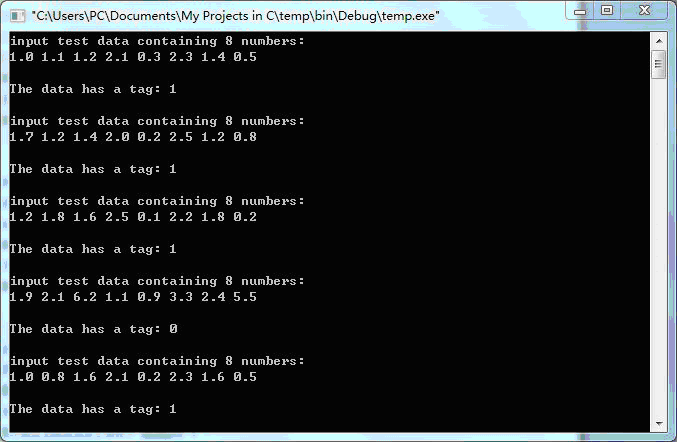
程序測試的結果:
1.0 1.1 1.2 2.1 0.3 2.3 1.4 0.5 類別為: 1
1.7 1.2 1.4 2.0 0.2 2.5 1.2 0.8 類別為: 1
1.2 1.8 1.6 2.5 0.1 2.2 1.8 0.2 類別為: 1
1.9 2.1 6.2 1.1 0.9 3.3 2.4 5.5 類別為: 0
1.0 0.8 1.6 2.1 0.2 2.3 1.6 0.5 類別為: 1
1.6 2.1 5.2 1.1 0.8 3.6 2.4 4.5 類別為: 0
實驗截圖: