新建一個類庫名為“WcfSecurityExampleServiceLibrary”的類庫項目,添加如代碼清單11-10所示的契約,其中將示例契約命名為HelloService。
代碼清單11-10 HelloService契約
using System;

using System.Collections.Generic;

using System.Linq;

using System.Runtime.Serialization;

using System.ServiceModel;

using System.Text;


namespace WcfSecurityExampleServiceLibrary

{

     [ServiceContract]

    public interface IHelloService

    {

        [OperationContract]

        string GetHello();

    }

}
代碼清單11-11是HelloService契約的實現。
using System;

using System.Collections.Generic;

using System.Linq;

using System.Runtime.Serialization;

using System.ServiceModel;

using System.Text;


namespace WcfSecurityExampleServiceLibrary

{

    public class HelloService : IHelloService

    {


        public string GetHello()

        {

             if (ServiceSecurityContext.Current != null)

            {


                if (!ServiceSecurityContext.Current.IsAnonymous)

                {


                    return "Hello:" + ServiceSecurityContext.Current.PrimaryIdentity.Name + ";type="

                        + ServiceSecurityContext.Current.PrimaryIdentity.AuthenticationType;


                }

                return "";

            }

            else

            {

                return "hello";

            }        }

    }

}
這裡采用控制台程序做自托管宿主,宿主代碼如代碼清單11-12所示。
代碼清單11-12 宿主代碼
using System;

using System.Collections.Generic;

using System.Linq;

using System.Text;

using System.ServiceModel;

using WcfSecurityExampleServiceLibrary;


namespace SimpleHost

{

    class Program

    {

        static void Main(string[] args)

        {

            ServiceHost hostForHello = new ServiceHost(typeof(HelloService));

            hostForHello.Open();

            try

            {

                while (true)

                {


                }

            }

            catch

            {


                hostForHello.Abort();

            }

        }

    }

}
宿主配置文件如代碼清單11-13所示。
代碼清單11-13 宿主配置文件
<?xml version="1.0"?>

<configuration>

  <system.serviceModel>

    <services>

      <service name="WcfSecurityExampleServiceLibrary.HelloService" behaviorConfiguration="mex">

        <host>

          <baseAddresses>

            <add baseAddress="net.tcp://127.0.0.1:64567/"/>

          </baseAddresses>

        </host>

        <endpoint address="net.tcp://127.0.0.1:64567/HelloService" binding="netTcpBinding"

                  bindingConfiguration="tcpWindowsSecurity" name="helloEndPoint"

                  contract="WcfSecurityExampleServiceLibrary.IHelloService"/>


        <endpoint address="mex" binding="mexTcpBinding" contract="IMetadataExchange" />

      </service>

    </services>

    <bindings>


      <netTcpBinding>

        <binding name="tcpWindowsSecurity">

        </binding>

      </netTcpBinding>

    </bindings>


    <behaviors>

      <serviceBehaviors>

        <behavior name="mex">

          <serviceMetadata  />

        </behavior>

      </serviceBehaviors>

    </behaviors>

  </system.serviceModel>


  <startup>

    <supportedRuntime version="v4.0" sku=".NETFramework,Version=v4.0"/>

  </startup>

</configuration>
代碼清單11-13所示的配置文件並沒有對netTcpBinding做任何的安全配置,因此一切將采用默認設置。
客戶端實現如代碼清單11-14所示。
代碼清單11-14 客戶端實現
using System;

using System.Collections.Generic;

using System.Linq;

using System.Text;

using System.ServiceModel;

using WcfSecurityExampleServiceLibrary;


namespace WcfSecurityExampleConsoleClient

{

    class Program

    {

        static void Main(string[] args)

        {

            using (ChannelFactory<IHelloService> channelFactory = new ChannelFactory<IHelloService>("helloEndPoint"))

            {

                IHelloService helloService = channelFactory.CreateChannel();

                using (helloService as IDisposable)

                {

                    Console.WriteLine(helloService.GetHello());

                              }

            }

         Console.Read();

        }

    }

}
查看本欄目
圖11-6的運行結果可以證明,在默認情況下,netTcpBinding采用的是Transport安全模式,憑據類型為Windows。
繼續修改客戶端的配置為代碼清單11-16所示的內容。然後啟動TcpTrace來監聽通信。
代碼清單11-16 客戶端的配置(為配合TcpTrace監聽修改)
<?xml version="1.0" encoding="utf-8" ?>

<configuration>

  <system.serviceModel>

    <behaviors >

      <endpointBehaviors>

        <behavior  name="ForListen">

          <clientVia viaUri="net.tcp://127.0.0.1:64590/HelloService"/>

        </behavior>

      </endpointBehaviors>

    </behaviors>

    <bindings>


      <netTcpBinding>

        <binding name="tcpWindowsSecurity">

          <!--<security mode="None"></security> -->

        </binding>

      </netTcpBinding>

    </bindings>

    <client>

      <endpoint name="helloEndPoint" address="net.tcp://127.0.0.1:64567/HelloService"

          binding="netTcpBinding" bindingConfiguration="tcpWindowsSecurity"

          contract="WcfSecurityExampleServiceLibrary.IHelloService" behaviorConfiguration="ForListen" />

    </client>

  </system.serviceModel>


</configuration>
以上代碼加粗的部分為新增的配置,配置了客戶端的轉向請求,轉向的端口“64590”為TcpTrace的監聽端口。再次運行程序,TcpTrace的監聽監聽結果如圖11-7所示。
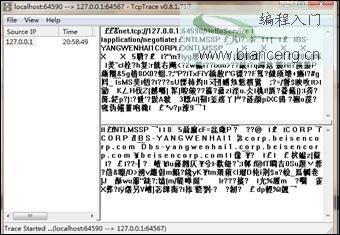
圖11-7 監聽Transport安全模式下的默認配置
從圖11-7中可以看出,默認情況下無法看到結果的明文信息,說明對消息進行了加密。
為了更清晰的理解默認情況下NetTcpBinding的安全配置,這裡給出兩段代碼和兩個配置文件,它們實現的是相同的效果。
初始化NetTcpBinding類實例1:
NetTcpBinding netTcpBingding = new NetTcpBinding();
初始化NetTcpBinding類實例2:
NetTcpBinding netTcpBingding = new NetTcpBinding();

   netTcpBingding.Security.Mode = SecurityMode.Transport;

   netTcpBingding.Security.Transport.ClientCredentialType = TcpClientCredentialType.Windows;

   netTcpBingding.Security.Transport.ProtectionLevel = System.Net.Security.ProtectionLevel.EncryptAndSign;
NetTcpBinding默認安全配置文件1:
<netTcpBinding>

        <binding name="tcpWindowsSecurity">

          <security>

          </security>

        </binding>

      </netTcpBinding>
NetTcpBinding默認安全配置文件2:
<netTcpBinding>

        <binding name="tcpWindowsSecurity">

          <security mode="Transport" >

            <transport

protectionLevel="EncryptAndSign"

clientCredentialType="Windows">

</transport>

          </security>

        </binding>

      </netTcpBinding>
作者:玄魂
出處:http://www.cnblogs.com/xuanhun/