from __future__ import annotations
from collections.abc import Callable
from typing import Generic, TypeVar
T = TypeVar("T")
U = TypeVar("U")
class DoubleLinkedListNode(Generic[T, U]):
def __init__(self, key: T | None, val: U | None):
self.key = key
self.val = val
self.freq: int = 0
self.next: DoubleLinkedListNode[T, U] | None = None
self.prev: DoubleLinkedListNode[T, U] | None = None
def __repr__(self) -> str:
return "Node: key: {}, val: {}, freq: {}, has next: {}, has prev: {}".format(
self.key, self.val, self.freq, self.next is not None, self.prev is not None
)
class DoubleLinkedList(Generic[T, U]):
def __init__(self) -> None:
self.head: DoubleLinkedListNode[T, U] = DoubleLinkedListNode(None, None)
self.rear: DoubleLinkedListNode[T, U] = DoubleLinkedListNode(None, None)
self.head.next, self.rear.prev = self.rear, self.head
def __repr__(self) -> str:
rep = ["DoubleLinkedList"]
node = self.head
while node.next is not None:
rep.append(str(node))
node = node.next
rep.append(str(self.rear))
return ",\n ".join(rep)
def add(self, node: DoubleLinkedListNode[T, U]) -> None:
""" Adds the given node at the tail of the list and shifting it to proper position """
previous = self.rear.prev
# All nodes other than self.head are guaranteed to have non-None previous
assert previous is not None
previous.next = node
node.prev = previous
self.rear.prev = node
node.next = self.rear
node.freq += 1
self._position_node(node)
def _position_node(self, node: DoubleLinkedListNode[T, U]) -> None:
""" Moves node forward to maintain invariant of sort by freq value """
while node.prev is not None and node.prev.freq > node.freq:
# swap node with previous node
previous_node = node.prev
node.prev = previous_node.prev
previous_node.next = node.prev
node.next = previous_node
previous_node.prev = node
def remove(
self, node: DoubleLinkedListNode[T, U]
) -> DoubleLinkedListNode[T, U] | None:
""" Removes and returns the given node from the list Returns None if node.prev or node.next is None """
if node.prev is None or node.next is None:
return None
node.prev.next = node.next
node.next.prev = node.prev
node.prev = None
node.next = None
return node
class LFUCache(Generic[T, U]):
# class variable to map the decorator functions to their respective instance
decorator_function_to_instance_map: dict[Callable[[T], U], LFUCache[T, U]] = {
}
def __init__(self, capacity: int):
self.list: DoubleLinkedList[T, U] = DoubleLinkedList()
self.capacity = capacity
self.num_keys = 0
self.hits = 0
self.miss = 0
self.cache: dict[T, DoubleLinkedListNode[T, U]] = {
}
def __repr__(self) -> str:
""" Return the details for the cache instance [hits, misses, capacity, current_size] """
return (
f"CacheInfo(hits={
self.hits}, misses={
self.miss}, "
f"capacity={
self.capacity}, current_size={
self.num_keys})"
)
def __contains__(self, key: T) -> bool:
""" >>> cache = LFUCache(1) >>> 1 in cache False >>> cache.set(1, 1) >>> 1 in cache True """
return key in self.cache
def get(self, key: T) -> U | None:
""" Returns the value for the input key and updates the Double Linked List. Returns Returns None if key is not present in cache """
if key in self.cache:
self.hits += 1
value_node: DoubleLinkedListNode[T, U] = self.cache[key]
node = self.list.remove(self.cache[key])
assert node == value_node
# node is guaranteed not None because it is in self.cache
assert node is not None
self.list.add(node)
return node.val
self.miss += 1
return None
def set(self, key: T, value: U) -> None:
""" Sets the value for the input key and updates the Double Linked List """
if key not in self.cache:
if self.num_keys >= self.capacity:
# delete first node when over capacity
first_node = self.list.head.next
# guaranteed to have a non-None first node when num_keys > 0
# explain to type checker via assertions
assert first_node is not None
assert first_node.key is not None
assert self.list.remove(first_node) is not None
# first_node guaranteed to be in list
del self.cache[first_node.key]
self.num_keys -= 1
self.cache[key] = DoubleLinkedListNode(key, value)
self.list.add(self.cache[key])
self.num_keys += 1
else:
node = self.list.remove(self.cache[key])
assert node is not None # node guaranteed to be in list
node.val = value
self.list.add(node)
@classmethod
def decorator(
cls: type[LFUCache[T, U]], size: int = 128
) -> Callable[[Callable[[T], U]], Callable[..., U]]:
""" Decorator version of LFU Cache Decorated function must be function of T -> U """
def cache_decorator_inner(func: Callable[[T], U]) -> Callable[..., U]:
def cache_decorator_wrapper(*args: T) -> U:
if func not in cls.decorator_function_to_instance_map:
cls.decorator_function_to_instance_map[func] = LFUCache(size)
result = cls.decorator_function_to_instance_map[func].get(args[0])
if result is None:
result = func(*args)
cls.decorator_function_to_instance_map[func].set(args[0], result)
return result
def cache_info() -> LFUCache[T, U]:
return cls.decorator_function_to_instance_map[func]
setattr(cache_decorator_wrapper, "cache_info", cache_info)
return cache_decorator_wrapper
return cache_decorator_inner
if __name__ == "__main__":
import doctest
doctest.testmod()
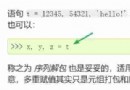 [Python] Python basic syntax learning (data structure, module, input and output, exception handling, class)
Python The official tutorial
 Qpython 3h, can these apps be packaged on mobile phones? Have experienced popular science??
Qpython 3h, These can be packe
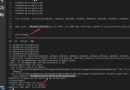 Use optimize curve_ Residuals are not final in the initial point when fit function is used to fit the curve. What should I do?
The phenomenon and background