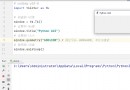
bin(5) # '0b101'
oct(5) # '0o5'
hex(5) # '0x5'
int('110',2) # 6
int('110',8) # 64+8=72
int('110', 16) # 16*16+16=272
eg. 123 => [1, 2, 3]
a = 123
b = str(a) #'123'
c = list(b) #['1','2','3']
d = list(map(int,c)) #[1, 2, 3]
eg. [1,2,3] => 123
a = [1,2,3]
b = list(map(str,a)) # ['1', '2', '3']
c = ''.join(b) # '123'
d = int(c) # 123
In the computer, the calculation is performed in the form of two's complement,5的是正數,補碼等於原碼:0000 0000 0000 0000 0000 0000 0000 0101, 取非後:1111 1111 1111 1111 1111 1111 1111 1010, Computer operations are performed in two's complement form,However, it is still displayed in the original form on the terminal,Convert the result back to the original code(補碼的補碼,Complementing a negative number is adding the inverse1):1000 0000 0000 0000 0000 0000 0000 0110, 也就是-6.
chr(97) #'a'
ord('a') # 97
numbers=[0,0,3,4]
for i,num in enumerate(numbers):
print(i, num)
0 0
1 0
2 3
3 4
分別是index, 和值