在創建新對象時,所有繼承下來的構造函數都會被繼承
example:
補充:如實例所示,Hippo 對象 IS-A Animal 同時也是IS-A Object,如果需要創建Hippo,也需要創建出Animal 以及Object的部分,這樣的過程被稱為“構造函數鏈(Constructor Chaining)” 。
1 public class Animal {
2    public Animal(){
3        System.out.println("Maka a animal");
4    }
5 }
1 public class Hippo extends Animal{
2   public Hippo(){
3       //super();默認添加,調用父類
4       System.out.println("make a Hippo");
5   }
6 }
1 public class TestHippo {
2
3     public static void main(String[] args) {
4         // TODO Auto-generated method stub
5       System.out.println("Starting...");
6       Hippo hippo=new Hippo();
7     }
8
9 }
順序執行
為什麼子類一定要訪問父類中的構造函數呢?
Plus example:
 1 class Fu{
 2     int x =30;
 3   Fu()
 4     {
 6       System.out.println(x);
 7     }
 8  Fu(int x)
 9    {
10      System.out.println(x);
11     }
12  }
13  class Zi extends Fu {
14      Zi(){
15          //seper();
16          //super(4);  //指定訪問父類中帶有一個參數的構造函數
17          this(20);
18         System.out.println("zi ..."+x);
19      }
20     Zi(int x)
21     {
22         System.out.println("zi..."+x);
23      }
24
25 }
26 public class Single {
27      public static void main(String[] args) {
28          Zi z=new Zi();
29          //Zi z1=new Zi(3);
30      }
31  }
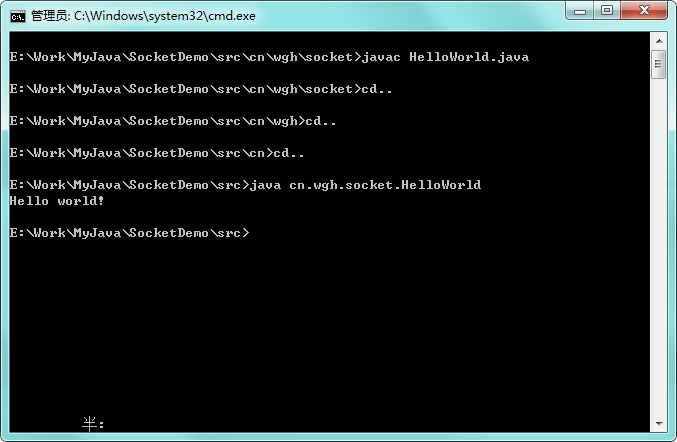
執行結果:
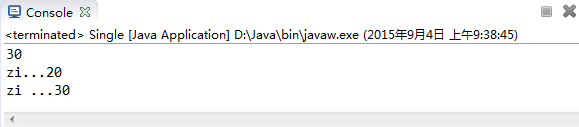
執行順序: