在項目中我需要使用到一個隨機數(Random Number),該隨機數將作為 Hashtable 中的 Key 用於唯一索引數據,所以需要保持單機唯一性。
同時該隨機數還需要具備可排序性以便對數據進行排序。
此時,我可以考慮使用隨機字符串《C#生成MongoDB中的ObjectId》,這裡的 ObjectId 具備單機唯一性和可排序性。
但另一個需求是,我需要該隨機數為 int 或 long 類型,以便與依賴的 Service 進行通信,部分取代 TransactionId 或 Token 的職責。
所以,很自然的我就想到了時間。
查看了 MSDN 上關於 DateTime.MinValue 和 DateTime.Ticks 的定義,考慮到我所設計的服務每秒不會產生多於 10000000 的數據,
我決定使用 DateTime.Ticks 作為隨機數的起始點,這樣就有了下面這段代碼。
public static class UniqueId
  {
    private static long _sequence = DateTime.UtcNow.Ticks;

    public static long Generate()
    {
      return Interlocked.Increment(ref _sequence);
    }

    public static long Sequence
    {
      get
      {
        return _sequence;
      }
    }
  }
業務邏輯中會將 UniqueId 存儲到 SQL Server 數據庫中,使用 bigint 類型進行存儲。
1 CREATE TABLE [TableName](
2 [UniqueId] [bigint] NOT NULL,
3 );
這樣,在數據庫中,該 UniqueId 即可作為索引,也可進行排序。
現在問題來了,我需要將一個較老的服務升級到新的服務中,做 Date Migration。
老的服務中沒有 UniqueId 邏輯和數據,這就需要我在數據遷移時為每條表數據生成該 UniqueId。
顯然,SQL Server 不會幫我做這件事,我需要使用 SQL Script 來生成 UniqueId。
DateTime.Ticks 的定義是:
A single tick represents one hundred nanoseconds or one ten-millionth of a second. There are 10,000 ticks in a millisecond.
1 Tick 等於千萬分之一秒,或萬分之一毫秒。
The value represents the number of 100-nanosecond intervals that have elapsed since 12:00:00 midnight, January 1, 0001, which represents DateTime.MinValue.
DateTime.Ticks 代表著從時間 "00:00:00.0000000, January 1, 0001" 至當前時間的 Tick 總數。
這樣,我們就可以根據其原理通過 SQL 來計算其值。
DECLARE @current_datetime DATETIME;
DECLARE @days_from_0001_to_1900 BIGINT;
DECLARE @ticks_per_millisecond BIGINT;
DECLARE @ticks_per_day BIGINT;
DECLARE @millisecond_of_time BIGINT;
DECLARE @ticks_of_days BIGINT;
DECLARE @ticks_of_time BIGINT;
DECLARE @ticks BIGINT;

SET @current_datetime = GETUTCDATE();
SET @days_from_0001_to_1900 = 693595;
SET @ticks_per_millisecond = 10000;
SET @ticks_per_day = 24 * 3600 * 1000 * @ticks_per_millisecond;
SET @millisecond_of_time =
    DATEPART(MILLISECOND, @current_datetime)
    + (DATEPART(SECOND, @current_datetime)) * 1000
    + (DATEPART(MINUTE, @current_datetime)) * 60000
    + (DATEPART(HOUR, @current_datetime)) * 3600000;
SET @ticks_of_days = CAST(@days_from_0001_to_1900 + DATEDIFF(DAY, 0, @current_datetime) AS BIGINT) * @ticks_per_day;
SET @ticks_of_time = @millisecond_of_time * @ticks_per_millisecond;
SET @ticks = @ticks_of_days + @ticks_of_time;

SELECT @current_datetime, @ticks
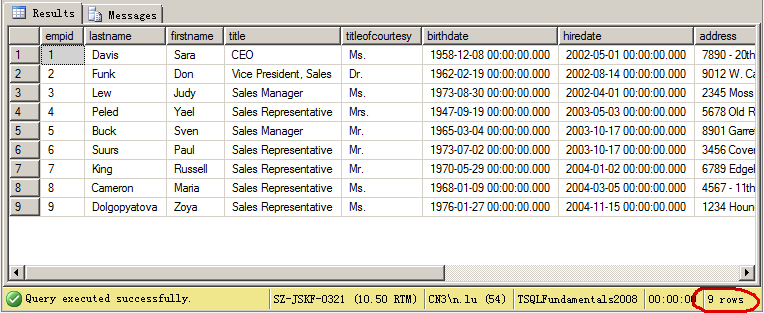
這段 SQL 腳本的運行結果是:
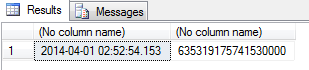
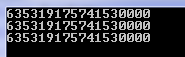
我們通過下面這段 C# 代碼來驗證結果。
class Program
  {
    static void Main(string[] args)
    {
      DateTime d1 = new DateTime(2014, 04, 01, 02, 52, 54, 153, DateTimeKind.Utc);
      DateTime d2 = DateTime.Parse("2014-04-01 02:52:54.153");
      DateTime d3 = DateTime.Parse("2014-04-01 02:52:54.153",
        CultureInfo.CurrentCulture, DateTimeStyles.AdjustToUniversal);

      Console.WriteLine(d1.Ticks);
      Console.WriteLine(d2.Ticks);
      Console.WriteLine(d3.Ticks);

      Console.ReadKey();
    }
  }
瞧,它們的結果一致為 635319175741530000。