QT       += core network
QT       -= gui
TARGET = poco_mysql
CONFIG   += console
CONFIG   -= app_bundle

DEFINES += CHARTDIR_HIDE_OBSOLETE _CRT_SECURE_NO_WARNINGS
INCLUDEPATH += /usr/local/include/Poco -I /usr/include/mysql
LIBS += -L/usr/local/lib -lPocoData -lPocoDataMySQL -lPocoDataSQLite  -lPocoCrypto   -lPocoUtil -lPocoFoundation -L /usr/lib64/mysql
#LIBS += -L/usr/local/lib -lPocoData  -lPocoDataSQLite   -lPocoFoundation  -lPocoCrypto   -lPocoUtil
SOURCES += \
mysql.cpp main文件
#include "Poco/String.h"
#include "Poco/Format.h"
#include "Poco/Exception.h"
#include "Poco/Data/StatementImpl.h"
#include "Poco/Data/MySQL/Connector.h"
#include "Poco/Data/MySQL/MySQLException.h"
#include "Poco/Data/Session.h"
#include "Poco/Data/SessionPool.h"
#include "Poco/Data/SessionFactory.h"
#include "Poco/Data/LOB.h"
#include "Poco/Data/MySQL/MySQLStatementImpl.h"
#include "Poco/DateTime.h"
#include "Poco/Data/RecordSet.h"
#include "Poco/Data/Column.h"

#include <iostream>

using namespace Poco::Data::Keywords;
using namespace Poco::Data;
using Poco::Data::Session;
using Poco::Data::MySQL::ConnectionException;
using Poco::Data::MySQL::StatementException;
using Poco::NotFoundException;
using Poco::Data::Statement;
using Poco::DateTime;
using Poco::Data::RecordSet;
//給出訪問數據庫的信息
std::string _dbConnString  = "host=localhost;port=3306;"
                                                "user=root;password=19810311;"
                                                "db=smart;"
                                                "compress=true;auto-reconnect=true";

int main(int argc, char** argv)
{
        MySQL::Connector::registerConnector();
        //與數據庫建立一個連接池
        Poco::Data::SessionPool pool(MySQL::Connector::KEY, _dbConnString,1,32,10);
        //從數據庫存連接池中獲得一個數據庫連接
        Poco::Data::Session ses(pool.get());
        //如果與數據庫建立會話成功,輸出連接信息
        if(ses.isConnected())
             std::cout << "*** Connected to " << '(' << _dbConnString << ')' << std::endl;
        //如果有為名ddjj的表,先刪除,方便下面調試
        ses << "DROP TABLE IF EXISTS ddjj", now;

        //把查詢結果存儲到容器中
        std::vector<std::string> names;
        ses << "show databases",into(names), now;
       //輸出查詢結果,此處列出所有數據庫名稱
        for (std::vector<std::string>::const_iterator it = names.begin(); it != names.end(); ++it)
        {
            std::cout << *it << std::endl;
        }

        // 建立一個表,名為ddjj,字段名:name,sex
        ses << "create table ddjj(name VARCHAR(20),sex VARCHAR(20));", now;
       //實現數據紀錄的插入
        DateTime bd(1980, 4, 1);
        DateTime ld(1982, 5, 9);
        ses << "INSERT INTO ddjj VALUES('Bart Simpson',  ?)", use(bd), now;
        ses << "INSERT INTO ddjj VALUES('Lisa Simpson',  ?)", use(ld), now;
       //實現查詢的方法,並輸出查詢結果
        std::vector<std::string> names1;
        ses << "select * from ddjj where name like 'Bart Simpson' ",
            into(names1),
            now;
        for (std::vector<std::string>::const_iterator it = names1.begin(); it != names1.end(); ++it)
        {
           std::cout << "*** tables: " << *it << std::endl;
        }

        Statement select(ses);
        select << "SELECT * FROM ddjj";
        select.execute();

        //創建紀錄集
        RecordSet rs(select);
        std::size_t cols = rs.columnCount();
        //輸出列名
        for (std::size_t col = 0; col < cols; ++col)
        {
            std::cout << rs.columnName(col) << std::endl;
        }
        //輸出所有查詢到的結果
        bool more = rs.moveFirst();
        while (more)
        {
            for (std::size_t col = 0; col < cols; ++col)
            {
                std::cout << rs[col].convert<std::string>() << " ";
            }
            std::cout << std::endl;
            more = rs.moveNext();
        }

        ses.close();
        MySQL::Connector::unregisterConnector();
        return 0;
}
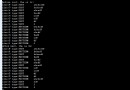
四 輸出結果 *** Connected to (host=localhost;port=3306;user=root;password=19810311;db=smart;compress=true;auto-reconnect=true) information_schema mysql performance_schema smart *** tables: Bart Simpson name sex Bart Simpson 1980-04-01 00:00:00 Lisa Simpson 1982-05-09 00:00:00