模板設計模式,可以顧名思義,就是要先有個模板,然後可以利用這個模板類做出自己需要的類,通過盡量少的修改。
所以先定義一個模板類:
class MachineTemplate
{
public:
	void go()
	{
		startup();
		getParts();
		assemble();
		testing();
		ending();
	}

	virtual void startup()
	{
		cout<<"Starting up ..."<

假設這個是通用設計機器人的類,那麼如果想要一個有特征的機器人,就需要修改其中的函數,得到想要的功能。
如我們需要一個killing machine:
// Inheriting class
class KillingMachine : public MachineTemplate
{
	string name;
public:
	KillingMachine(string n = "No Name") : name(n)
	{
	}

	string getName()
	{
		return name;
	}

	void getParts()
	{
		cout<<"Get gun, get bullets, get missiles ...\n";
	}

	void assemble()
	{
		cout<<"Gun up, load up, and missile up, ready for party ...\n";
	}

	void testing()
	{
		cout<<"Killing ...\n";
	}
};

還需要一個巡邏機器人:
class PatrolMachine : public MachineTemplate
{
	string name;
public:
	PatrolMachine(string n = "No Name") : name(n)
	{
	}

	string getName()
	{
		return name;
	}

	void startup()
	{
		cout<<"Set up patrol line ...\n";
	}

	void assemble()
	{
		cout<<"Patroling, make sure the street is saft ...\n";
	}

	void testing()
	{
		cout<<"Checking if this object is danger ...\n";
	}

	void ending()
	{
		cout<<"Patroling is over, getting back to station ...\n";
	}
};

可以看到這兩個特別的機器人都是通過修改其中的一些函數,得到一個特別的類的。
所以通過兩步就完成了應用模板模式了。
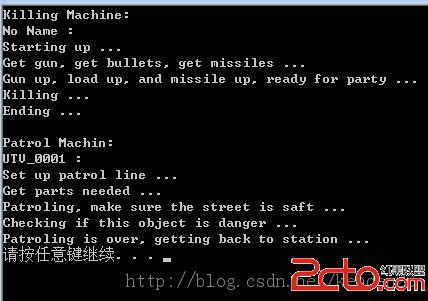
最後測試:
void Template_Run_1()
{
	KillingMachine killer;

	PatrolMachine patrol("UTV_0001");

	cout<<"Killing Machine:\n";
	cout<