1、關於foreach和for
foreach和for都是循環的關鍵字,使用這兩個關鍵字可以對集合對象進行遍歷,獲取裡面每一個對象的信息進行操作。
  static void Main(string[] args)
        {
            string[] strList = new string[]
            {
                "1","2","3","4"
            };

            for (int i = 0; i < strList.Length; i++)
            {
                Console.WriteLine(strList[i]);
            }

            foreach (string str in strList)
            {
                Console.WriteLine(str);
            }

            Console.ReadKey();
        }
上面結果的輸出都是一樣的,我們來看看IL是否是一樣的。
 1 IL_002c:  br.s       IL_003d   //for開始的地方
 2   IL_002e:  nop
 3   IL_002f:  ldloc.0
 4   IL_0030:  ldloc.1
 5   IL_0031:  ldelem.ref
 6   IL_0032:  call       void [mscorlib]System.Console::WriteLine(string)
 7   IL_0037:  nop
 8   IL_0038:  nop
 9   IL_0039:  ldloc.1  //
10   IL_003a:  ldc.i4.1 //
11   IL_003b:  add      //索引加1,這裡的索引是已經保存在堆棧中的索引
12   IL_003c:  stloc.1
13   IL_003d:  ldloc.1
14   IL_003e:  ldloc.0
15   IL_003f:  ldlen
16   IL_0040:  conv.i4
17   IL_0041:  clt
18   IL_0043:  stloc.s    CS$4$0001
19   IL_0045:  ldloc.s    CS$4$0001
20   IL_0047:  brtrue.s   IL_002e   //跳轉到第2行
21   IL_0049:  nop
22   IL_004a:  ldloc.0
23   IL_004b:  stloc.s    CS$6$0002
24   IL_004d:  ldc.i4.0
25   IL_004e:  stloc.s    CS$7$0003
26   IL_0050:  br.s       IL_0067   //foreach開始的地方
27   IL_0052:  ldloc.s    CS$6$0002
28   IL_0054:  ldloc.s    CS$7$0003
29   IL_0056:  ldelem.ref
30   IL_0057:  stloc.2
31   IL_0058:  nop
32   IL_0059:  ldloc.2
33   IL_005a:  call       void [mscorlib]System.Console::WriteLine(string)
34   IL_005f:  nop
35   IL_0060:  nop
36   IL_0061:  ldloc.s    CS$7$0003  //
37   IL_0063:  ldc.i4.1              //
38   IL_0064:  add                   //當前索引處加1
39   IL_0065:  stloc.s    CS$7$0003
40   IL_0067:  ldloc.s    CS$7$0003
41   IL_0069:  ldloc.s    CS$6$0002
42   IL_006b:  ldlen
43   IL_006c:  conv.i4
44   IL_006d:  clt
45   IL_006f:  stloc.s    CS$4$0001
46   IL_0071:  ldloc.s    CS$4$0001
47   IL_0073:  brtrue.s   IL_0052     //跳轉到27行
從IL可以看出,for中循環的索引是for自身的索引(即i),foreach在循環過程中會在指定位置存儲一個值,這個值就是循環用的索引。所以,其實foreach內部還是存儲了一個索引值用於循環,只是我們在用的過程中沒有察覺到存在這個變量而已。
我們再來看看下面這個例子:
 static void RunFor()
        {
            string[] strList = new string[]
            {
                "1","2","3","4"
            };

            for (int i = 0; i < strList.Length; i++)
            {
                strList[i] = "1";
            }
        }

        static void RunForeach()
        {
            string[] strList = new string[]
            {
                "1","2","3","4"
            };

            foreach (string str in strList)
            {
                str = "1";
            }
        }
編譯出錯 : “str”是一個“foreach 迭代變量”,無法為它賦值
 static void RunFor()
        {
            List<string> strList = new List<string>()
            {
                "1","2","3","4"
            };

            for (int i = 0; i < strList.Count; i++)
            {
                strList[i] = "1";
            }
        }

        static void RunForeach()
        {
            List<string> strList = new List<string>()
            {
                "1","2","3","4"
            };

            foreach (string str in strList)
            {
                str = "1";
            }
        }
同樣,編譯器給出了相同的錯誤。
那麼如果在foreach中移除當前項呢?
class Program
    {
        static void Main(string[] args)
        {
            List<string> strs = new List<string>() { "1", "2", "3", "4" };
            foreach (string str in strs)
            {
                strs.Remove(str);
            }
            Console.ReadKey();
        }
    }
運行出現了異常
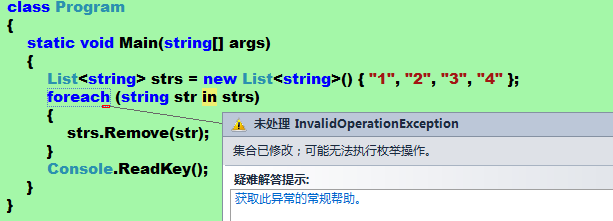
可以看出移除IEnumerable類型的變量也會出錯,所以在foreach中是不能改變進行迭代的集合對象值的。
2、foreach和IEnumerable的聯系
像List,Array等集合類型,可以使用for和foreach來對其進行循環迭代,獲得每一個集合內的對象用於操作。之所以可以使用foreach,是因為List,Array等類型實現了IEnumerable或者IEnumerable<T>接口。
public interface IEnumerable
{
    IEnumerator GetEnumerator();
}
IEnumerable接口內部只有一個方法,GetEnumerator()方法,返回值是一個IEnumerator類型的對象。
public interface IEnumerator
{
    bool MoveNext();
    object Current { get; }
    void Reset();
}
可以看出,在IEnumerator接口中有三個成員,用於移動位置的MoveNext函數,表示當前對象的Current屬性,重置函數Reset。
我們以ArrayList類型為例,來看看這個接口是怎麼實現的。
首先內部有一個數組變量用於存儲遍歷的集合對象。
object[] _items;
在內部私有的類ArrayListEnumeratorSimple中實現了IEnumerator接口成員。
 1  public bool MoveNext()
 2     {
 3         int num;
 4         if (this.version != this.list._version)
 5         {
 6             throw new InvalidOperationException(Environment.GetResourceString("InvalidOperation_EnumFailedVersion"));
 7         }
 8         if (this.isArrayList)
 9         {
10             if (this.index < (this.list._size - 1))
11             {
12                 num = this.index + 1;
13                 this.index = num;
14                 this.currentElement = this.list._items[num]; //其實還是取得內部的數組變量的成員
15                 return true;
16             }
17             this.currentElement = dummyObject;
18             this.index = this.list._size;
19             return false;
20         }
21         if (this.index < (this.list.Count - 1))
22         {
23             num = this.index + 1;
24             this.index = num;
25             this.currentElement = this.list[num]; //數組變量的成員
26             return true;
27         }
28         this.index = this.list.Count;
29         this.currentElement = dummyObject;
30         return false;
31     }
在MoveNext中進行迭代循環的時候迭代的是內部的_items數組,即每次取的值都是_items的成員,而_items數組是ArrayList的索引數組。每次迭代後都會保存當前索引值用於下次使用。
所以不難看出,IEnumerator接口內部實現的方式歸根結底還是和for實現的方式一樣的。
之所以修改枚舉值過後繼續訪問會拋出InvalidOperationException異常是因為以下代碼:
 if (this.version != this.list._version)
  {
     throw new InvalidOperationException(Environment.GetResourceString("InvalidOperation_EnumFailedVersion"));
  }
在Reset和MoveNext中都有這個判斷,如果枚舉值被修改了,他所對應的版本號將會發生改變(在Remove函數中將會執行this._version++,使得版本號發生了改變,其他改變枚舉值狀態的函數類似)。
3、自定義實現迭代器
具體實現代碼:
 class Program
    {
        static void Main(string[] args)
        {
            TestIEnumerable test = new TestIEnumerable();
            foreach (string str in test)
            {
                Console.WriteLine(str);
            }
            Console.ReadKey();
        }
    }

    class TestIEnumerable : IEnumerable
    {
        private string[] _item;

        public TestIEnumerable()
        {
            _item = new string[]
             {
                 "1","2","3","4"
             };
        }

        public string this[int index]
        {
            get { return _item[index]; }
        }

        public IEnumerator GetEnumerator()
        {
            return new EnumeratorActualize(this);
        }

        class EnumeratorActualize : IEnumerator
        {
            private int index;
            private TestIEnumerable _testEnumerable;
            private object currentObj;
            public EnumeratorActualize(TestIEnumerable testEnumerable)
            {
                _testEnumerable = testEnumerable;
                currentObj = new object();
                index = -1;
            }


            public object Current
            {
                get
                {
                    return currentObj;
                }
            }

            public bool MoveNext()
            {
                if (index < _testEnumerable._item.Length - 1)
                {
                    index++;
                    currentObj = _testEnumerable._item[index];
                    return true;
                }
                index = _testEnumerable._item.Length;
                return false;
            }

            public void Reset()
            {
                index = -1;
            }
        }
    }