上一篇文章我已經介紹了TypeConverterAttribute元數據的作用,本文將通過代碼向你展示具體的實 現。在這個例子中,我要給控件添加一個復雜的屬性,這個屬性對這個控件沒有什麼功用,純粹是為了演 示,有些牽強附會了。
現在在前一篇文章中的創建的控件代碼中添加一個Scope屬性:
        [Browsable(true)]

        public Scope Scope

        {

            get

            {

                return _scope;

            }

            set

            {

                _scope = value;

            }

        }
這個屬性的類型是Scope類,代碼如下:
public class Scope

    {

        private Int32 _min;

        private Int32 _max;


        public Scope()

        {

        }

public Scope(Int32 min, Int32 max)

        {

            _min = min;

            _max = max;

        }

        [Browsable(true)]

        public Int32 Min

        {

            get

            {

                return _min;

            }

            set

            {

                _min = value;

            }

        }

        [Browsable(true)]

        public Int32 Max

        {

            get

            {

                return _max;

            }

            set

            {

                _max = value;

            }

        }

}
添加完屬性後,build控件工程,然後在測試的工程裡選中添加的控件,然後在屬性浏覽器裡觀察它的 屬性,發現Scope屬性是灰的,不能編輯。前一篇文章提到了,在屬性浏覽器裡可以編輯的屬性都是有類 型轉換器的,而.NET框架為基本的類型和常用的類型都提供了默認的類型轉換器。接下來我們為Scope類 添加一個類型轉換器,以便這個屬性能夠被編輯,而且也可以在源代碼文件裡自動生成相應的代碼。下面 是類型轉換器的代碼:
public class ScopeConverter : TypeConverter

    {

        public override bool CanConvertFrom(ITypeDescriptorContext context, Type

sourceType)

        {

            if (sourceType == typeof(String)) return true;


            return base.CanConvertFrom(context, sourceType);

        }

        public override bool CanConvertTo(ITypeDescriptorContext context, Type

destinationType)

        {

            if (destinationType == typeof(String)) return true;


            if (destinationType == typeof(InstanceDescriptor)) return true;


            return base.CanConvertTo(context, destinationType);

        }

        public override object ConvertTo(ITypeDescriptorContext context,

System.Globalization.CultureInfo culture, object value, Type destinationType)

        {

            String result = "";

            if (destinationType == typeof(String))

            {

                Scope scope = (Scope)value;

                result = scope.Min.ToString()+"," + scope.Max.ToString();

                return result;

            }

            if (destinationType == typeof(InstanceDescriptor))

            {

                ConstructorInfo ci = typeof(Scope).GetConstructor(new Type[]

{typeof(Int32),typeof(Int32) });

                Scope scope = (Scope)value;

                return new InstanceDescriptor(ci, new object[] {

scope.Min,scope.Max });

            }

            return base.ConvertTo(context, culture, value, destinationType);

        }


        public override object ConvertFrom(ITypeDescriptorContext context,

System.Globalization.CultureInfo culture, object value)

        {

            if (value is string)

            {

                String[] v = ((String)value).Split(',');

                if (v.GetLength(0) != 2)

                {

                    throw new ArgumentException("Invalid parameter

format");

                }


                Scope csf = new Scope();

                csf.Min = Convert.ToInt32(v[0]);

                csf.Max = Convert.ToInt32(v[1]);

                return csf;

            }

            return base.ConvertFrom(context, culture, value);

        }

    }
現在我們為類型提供類型轉換器,我們在類型前面添加一個TypeConverterAttribute,如下:
    [TypeConverter(typeof(ScopeConverter))]

    public class Scope
添加完以後build工程,然後切換到測試工程,選中控件,在屬性浏覽器裡查看屬性,現在的Scope屬 性可以編輯了,如下圖所示:
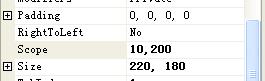
我們修改默認的值,然後看看Form設計器為我們生成了什麼代碼:
this.myListControl1.BackColor = System.Drawing.SystemColors.ActiveCaptionText;

            this.myListControl1.Item.Add(1);

            this.myListControl1.Item.Add(2);

            this.myListControl1.Item.Add(3);

            this.myListControl1.Item.Add(6);

            this.myListControl1.Item.Add(8);

            this.myListControl1.Item.Add(9);

            this.myListControl1.Location = new System.Drawing.Point(12, 34);

            this.myListControl1.Name = "myListControl1";

            this.myListControl1.Scope = new CustomControlSample.Scope(10, 200);

            this.myListControl1.Size = new System.Drawing.Size(220, 180);

            this.myListControl1.TabIndex = 1;

        this.myListControl1.Text = "myListControl1";
關鍵是這一行this.myListControl1.Scope = new CustomControlSample.Scope(10, 200),Scope類的 類型轉換器為屬性提供了實例化的代碼。