一、只帶有純文本的郵件
代碼事例如下:
package com.lyh.sendemail;

import java.util.Properties;

import javax.mail.Message;
import javax.mail.Session;
import javax.mail.Transport;
import javax.mail.internet.InternetAddress;
import javax.mail.internet.MimeMessage;

//發送郵件
public class MessageDemo1 {

    public static void main(String[] args) throws Exception{
        Properties props = new Properties();//key value:配置參數。真正發送郵件時再配置
        props.setProperty("mail.transport.protocol", "smtp");//指定郵件發送的協議,參數是規范規定的
        props.setProperty("mail.host", "smtp.163.com");//指定發件服務器的地址,參數是規范規定的
//        props.setProperty("mail.debug", "true");//郵件發送的調試模式,參數是規范規定的
        props.setProperty("mail.smtp.auth", "true");//請求服務器進行身份認證。參數與具體的JavaMail實現有關

        Session session = Session.getInstance(props);//發送郵件時使用的環境配置
        session.setDebug(true);
        MimeMessage message = new MimeMessage(session);

        //設置郵件的頭
        message.setFrom(new InternetAddress("xxx@163.com"));
        message.setRecipients(Message.RecipientType.TO, "xxx@qq.com");
        message.setSubject("This is second message");
        //設置正文
        message.setContent("<h1>hello</h1>", "text/html");
//        message.setText("<h1>hello</h1>");//純文本

        message.saveChanges();

        //發送郵件
        Transport ts = session.getTransport();
        ts.connect("xxx@163.com", "123456");       // 密碼為授權碼不是郵箱的登錄密碼
        ts.sendMessage(message, message.getAllRecipients());//對象,用實例方法}
    }
}
二、帶有圖片的郵件
a、復雜郵件封裝模型
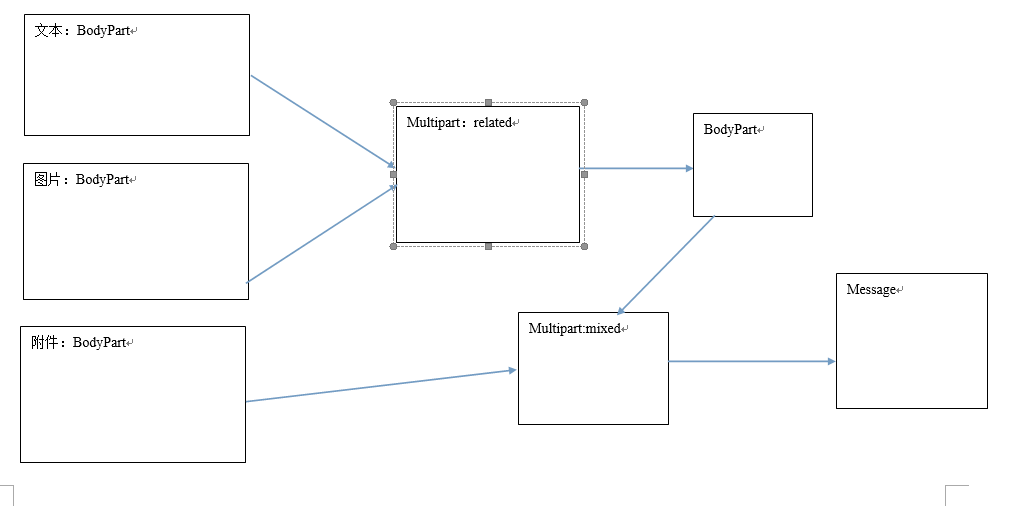
代碼事例
package com.lyh.sendemail;

import java.util.Properties;

import javax.activation.DataHandler;
import javax.activation.FileDataSource;
import javax.mail.Message;
import javax.mail.Session;
import javax.mail.Transport;
import javax.mail.internet.InternetAddress;
import javax.mail.internet.MimeBodyPart;
import javax.mail.internet.MimeMessage;
import javax.mail.internet.MimeMultipart;

//發送郵件
public class MessageDemo2 {

    public static void main(String[] args) throws Exception{
        Properties props = new Properties();//key value:配置參數。真正發送郵件時再配置

        props.setProperty("mail.transport.protocol", "smtp");//指定郵件發送的協議,參數是規范規定的
        props.setProperty("mail.host", "smtp.163.com");//指定發件服務器的地址,參數是規范規定的
//        props.setProperty("mail.debug", "true");//郵件發送的調試模式,參數是規范規定的
        props.setProperty("mail.smtp.auth", "true");//請求服務器進行身份認證。參數與具體的JavaMail實現有關

        Session session = Session.getInstance(props);//發送郵件時使用的環境配置
        session.setDebug(true);
        MimeMessage message = new MimeMessage(session);

        //設置郵件的頭
        message.setFrom(new InternetAddress("xxx@163.com"));
        message.setRecipients(Message.RecipientType.TO, "xxx@qq.com");
        message.setSubject("This is second message");
        //設置正文

        //搞出文本部分
        MimeBodyPart textPart = new MimeBodyPart();
        textPart.setContent("aaa<img src='cid:mm'/>aaa", "text/html");

        //搞圖片部分
        MimeBodyPart imagePart = new MimeBodyPart();
        imagePart.setContentID("mm");
        //把磁盤上的文件加到part中使用到了JAF框架
        DataHandler dh = new DataHandler(new FileDataSource("src/0.jpg"));
        imagePart.setDataHandler(dh);

        MimeMultipart mp = new MimeMultipart();
        mp.addBodyPart(textPart);
        mp.addBodyPart(imagePart);
        mp.setSubType("related");//有關系的

        message.setContent(mp);
        message.saveChanges();

        //發送郵件
        Transport ts = session.getTransport();
        ts.connect("xxx@163.com", "123456"); //密碼為授權碼不是郵箱的登錄密碼
        ts.sendMessage(message, message.getAllRecipients());//對象,用實例方法
    }
}
三、帶有文本、圖片、附件的郵件
代碼事例:
package com.lyh.sendemail;

import java.util.Properties;

import javax.activation.DataHandler;
import javax.activation.FileDataSource;
import javax.mail.Message;
import javax.mail.Session;
import javax.mail.Transport;
import javax.mail.internet.InternetAddress;
import javax.mail.internet.MimeBodyPart;
import javax.mail.internet.MimeMessage;
import javax.mail.internet.MimeMultipart;
import javax.mail.internet.MimeUtility;

//發送郵件
public class MessageDemo3 {

    public static void main(String[] args) throws Exception{

        Properties props = new Properties();//key value:配置參數。真正發送郵件時再配置

        props.setProperty("mail.transport.protocol", "smtp");//指定郵件發送的協議,參數是規范規定的
        props.setProperty("mail.host", "smtp.163.com");//指定發件服務器的地址,參數是規范規定的
//        props.setProperty("mail.debug", "true");//郵件發送的調試模式,參數是規范規定的
        props.setProperty("mail.smtp.auth", "true");//請求服務器進行身份認證。參數與具體的JavaMail實現有關

        Session session = Session.getInstance(props);//發送郵件時使用的環境配置
//        session.setDebug(true);
        MimeMessage message = new MimeMessage(session);

        //設置郵件的頭
        message.setFrom(new InternetAddress("xxx@163.com"));
        message.setRecipients(Message.RecipientType.TO, "xxxqq.com");
        message.setSubject("這是一封復雜的郵件");
        //設置正文

        //搞出文本部分
        MimeBodyPart textPart = new MimeBodyPart();
        textPart.setContent("美女<img src='cid:mm'/>aaa", "text/html;charset=UTF-8");

        //搞圖片部分
        MimeBodyPart imagePart = new MimeBodyPart();
        imagePart.setContentID("mm");
        //把磁盤上的文件加到part中使用到了JAF框架
        DataHandler dh = new DataHandler(new FileDataSource("src/0.jpg"));
        imagePart.setDataHandler(dh);

        MimeMultipart mp = new MimeMultipart();
        mp.addBodyPart(textPart);
        mp.addBodyPart(imagePart);
        mp.setSubType("related");//有關系的

        MimeBodyPart textImagePart = new MimeBodyPart();    //將 MimeMultipart 添加到 MimeBodyPart實現附件的發送
        textImagePart.setContent(mp);

        //創建附件部分
        MimeBodyPart attachmentPart = new MimeBodyPart();
        dh = new DataHandler(new FileDataSource("src/賬戶.rar"));
        String filename = dh.getName();
        attachmentPart.setDataHandler(dh);

        //手工設置文件名  防止亂碼使用  javaMail裡的 MimeUtility進行編碼
        attachmentPart.setFileName(MimeUtility.encodeText(filename));

        //最終的 MimeMultipart
        MimeMultipart finalMp = new MimeMultipart();
        finalMp.addBodyPart(attachmentPart);
        finalMp.addBodyPart(textImagePart);

        finalMp.setSubType("mixed");

        message.setContent(finalMp);
        message.saveChanges();

        //發送郵件
        Transport ts = session.getTransport();
        ts.connect("xxx@163.com", "123456"); //密碼為授權碼不是郵箱的登錄密碼
        ts.sendMessage(message, message.getAllRecipients());//對象,用實例方法

    }
}