mybatis作為ORM輕量級框架一出現就吸引了無數人的眼球,比hibernate要簡單且入門較容易,下面開始我的第一個mybatis程序。
一、下載mybatis的包
我們知道任何一個框架都會有其包,我們從其官方網站下載其包,官網網址為:http://www.mybatis.org/mybatis-3/,我這裡使用的版本為3.3.0。下載完成之後解壓可看到如下的目錄結構:
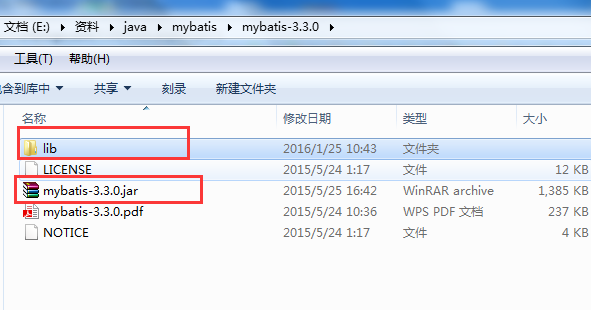
mybatis-3.3.0.jar是其包,lib目錄下是其依賴包,我們把這些包放到我們的項目中。我這裡創建的是javaweb項目,方便以後做web測試,編寫的程序是普通的java程序。
二、配置環境
把mybatis的包放到項目的lib目錄下之後,接下來時配置mybatis的環境,我們知道mybatis做為ORM框架,屬於開發中的DAO層,是和數據庫打交道的,所以我們必須有數據,這裡以mysql數據為例,具體的建庫和建表這裡不闡述。
在src目錄下創建mybatis的配置文件,文件名稱為:configuratin.xml,文件內容如下:
<?xml version="1.0" encoding="UTF-8" ?>
 <!DOCTYPE configuration PUBLIC "-//mybatis.org//DTD Config 3.0//EN"
 "http://mybatis.org/dtd/mybatis-3-config.dtd">
 <configuration>
<!--別名-->
 <typeAliases>
        <typeAlias alias="Message" type="com.cn.imooc.entity.Message"/>
    </typeAliases>
<environments default="development">
         <environment id="development">
         <transactionManager type="JDBC"/>
             <dataSource type="POOLED">
             <property name="driver" value="com.mysql.jdbc.Driver"/>
             <property name="url" value="jdbc:mysql://127.0.0.1:3306/weixin?useUnicode=true&characterEncoding=UTF-8" />
             <property name="username" value="root"/>
             <property name="password" value="123456"/>
             </dataSource>
         </environment>
     </environments>
<!--映射文件-->
<mappers>
         <mapper resource="com/cn/mappers/message.xml"/>
     </mappers>
 </configuration>
在mybatis配置文件中還有很多的配置項這裡僅僅使用了這幾個,
<typeAliases> 別名配置,即把實體類做個別名,目的在於在映射文件中使用實體類時不使用全限類名,而是使用別名,起到簡單的作用
<environments> 配置了一些環境 比如數據配置,這裡我們配置了數據源
<mappers> 配置映射文件,這裡配置了com.cn.mappers包下的message.xml映射文件
下面對Message實體類進行說明,此實體類裡是一些屬性,如下,
package com.cn.imooc.entity;

public class Message {
    private String id;
    private String command;
    private String description;
    private String comment;
    public String getId() {
        return id;
    }
    public void setId(String id) {
        this.id = id;
    }
    public String getCommand() {
        return command;
    }
    public void setCommand(String command) {
        this.command = command;
    }
    public String getDescription() {
        return description;
    }
    public void setDescription(String description) {
        this.description = description;
    }
    public String getComment() {
        return comment;
    }
    public void setComment(String comment) {
        this.comment = comment;
    }
    @Override
    public String toString() {
        return "Message [id=" + id + ", command=" + command + ", description="
                + description + ", comment=" + comment + "]";
    }


}
提供了getXXX和setXXX方法,其中setXXX方法很關鍵,我這裡的屬性和數據庫的字段名是一致,可以方便使用mybatis查詢出結果之後反射到實體類中,當然也可以和數據庫表字段名不一致,後續會進行說明。
message.xml映射文件如下,
<mapper namespace="com.cn.inter.IMessageOperation">
     <select id="selectUserByID" parameterType="int" resultType="com.cn.imooc.entity.Message">
         select * from `message` where id = #{id}
     </select>

     <select id="selectMessages"  resultType="Message">
         select id,
                command,
                description,
                comment
                from message;

     </select>
</mapper>
這是我的mapper映射文件,裡邊有兩個方法,一個是:selectUserById 根據id查詢,另一個是selectMessages 查詢所有
好了,到此為止,我們的mybatis的環境搭建完成,下面可以進行測試了。
三、測試
下面是測試代碼,
package com.cn.test;

import java.io.IOException;
import java.io.Reader;

import org.apache.ibatis.io.Resources;
import org.apache.ibatis.session.SqlSession;
import org.apache.ibatis.session.SqlSessionFactory;
import org.apache.ibatis.session.SqlSessionFactoryBuilder;

import com.cn.imooc.entity.Message;

public class MyTest {

    public static void main(String[] args) {
        // TODO Auto-generated method stub

        Reader reader;
        SqlSession sqlSession=null;
        try {
            //1、獲得sqlSessionFactory
            reader = Resources.getResourceAsReader("Configuration.xml");
            SqlSessionFactory sqlSessionFactory=new SqlSessionFactoryBuilder().build(reader);
            //2、獲得sqlSession
             sqlSession=sqlSessionFactory.openSession();
            //3、查詢
            Message message=sqlSession.selectOne("com.cn.inter.IMessageOperation.selectUserByID", 1);
            System.out.println(message);
        } catch (IOException e) {
            // TODO Auto-generated catch block
            e.printStackTrace();
        }
        finally{
            sqlSession.close();
        }

    }

}
從上面可以看出,首先需要一個SqlSessionFactory,然後由sqlSessionFactory獲得sqlSession,由sqlSession執行查詢,使用了selectOne方法,第一個參數是映射文件中的nameSpace+“.”方法名,第二個參數是查詢參數。
至此,一個mybatis程序就寫完了,後續還會介紹別的版本。
有不當之處歡迎指正
謝謝