一、簡介
pugixml的官方主頁為:http://pugixml.org/
pugixml是一個很棒的XML操作庫,
Xml庫解析性能比較表
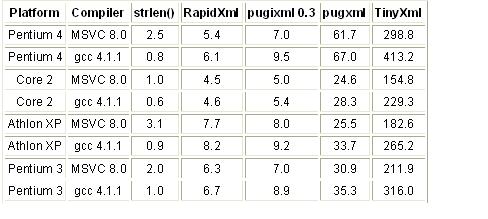
(表格來自:http://rapidxml.sourceforge.net/manual.html)
二、配置
pugixml的三個文件,可以只include頭文件pugixml.hpp,CPP文件不用放到項目中,
方法是,在pugiconfig.hpp中:
// Uncomment this to switch to header-only version
 #define PUGIXML_HEADER_ONLY
 #include "pugixml.cpp"
將這兩行的注釋去掉就可以了。
另外,如果項目使用的是Unicode設置,則可以在pugiconfig.hpp中:
// Uncomment this to enable wchar_t mode
 #define PUGIXML_WCHAR_MODE
將wchar模式打開即可。
三、使用
XML文件:
<?xml version="1.0" encoding="GBK"?>
<root>
    <ip>192.168.1.1</ip>
<root>
C++:
	void SaveToConfig( const wchar_t* xml_file, const wchar_t* ip )
	{
		using namespace pugi;

		xml_document doc;
		xml_parse_result result = doc.load_file( xml_file );
		if ( result.status != xml_parse_status::status_ok )
			return;

		xml_node node = doc.child( L"root" ).child( L"ip" );
		node.text().set( ip );

		doc.save_file( xml_file );
	}
這裡需要注意的是,ip節點的內容是一個pcdata類型的節點,這個節點的內容才是ip字符串,所以這裡用text()來讀寫IP節點內容。
如果要用.value()方法得到ip字符串的話,需要這樣用:
wstring ip = node.first_child().value();
node.first_child().set_value(L"10.10.10.10");
另外,node.text().set()方法也不錯,提供了常用的數據類型寫入XML的重載方法:
        // Set text (returns false if object is empty or there is not enough memory)
        bool set(const char_t* rhs);

        // Set text with type conversion (numbers are converted to strings, boolean is converted to "true"/"false")
        bool set(int rhs);
        bool set(unsigned int rhs);
        bool set(double rhs);
        bool set(bool rhs);

    #ifdef PUGIXML_HAS_LONG_LONG
        bool set(long long rhs);
        bool set(unsigned long long rhs);
    #endif
而node.text().as_xxx()方法可以按需要直接從XML文件中讀取出指定類型的數據:
        // Get text, or "" if object is empty
        const char_t* get() const;

        // Get text, or the default value if object is empty
        const char_t* as_string(const char_t* def = PUGIXML_TEXT("")) const;

        // Get text as a number, or the default value if conversion did not succeed or object is empty
        int as_int(int def = 0) const;
        unsigned int as_uint(unsigned int def = 0) const;
        double as_double(double def = 0) const;
        float as_float(float def = 0) const;

    #ifdef PUGIXML_HAS_LONG_LONG
        long long as_llong(long long def = 0) const;
        unsigned long long as_ullong(unsigned long long def = 0) const;
    #endif
實際上node.text()返回的是xml_text對象實例,上面的set()和as_xxx()是由xml_text實現的。
如果IP節點有屬性的話,可以遍歷屬性:
        for (pugi::xml_attribute attr = node.first_attribute(); attr; attr = attr.next_attribute())
        {
            std::cout << " " << attr.name() << "=" << attr.value();
        }
作為讀取配置文件用,上面這些也差不多了,其它接口看看源碼就能明白怎樣用,pugixml提供了些高級用法,可以看他官網上提供的例子。
四、注意事項
除了上面提到的<ip>節點內容為pcdata節點外,
關於中文的問題,clever101曾在pugixml庫的一個使用心得中提到,要用
std::locale::global(std::locale("chs"));
const std::wstring strFilePath = _T(“c:\\ xgconsole.xml”);
std::wifstream stream(strFilePath.c_str());
pugi::xml_document doc;
doc.load(stream);
這種load stream的方式讀取,其實不必如此,只要保證文件保存時編碼為GB2312並且XML文件頭的聲明encoding="gb2312“就可以了。

<?xml version="1.0" encoding="gb2312"?>