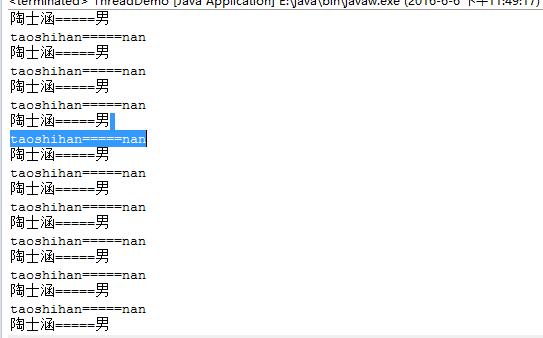
兩個線程操作同一個資源,比如,輸入和輸出,操作同一個對象,此時兩個線程會爭奪cpu的執行權,隨機的進行切換。我們想實現先輸入再輸出,順序的執行
目標對象定義一個標記字段,進行判斷,wait()和notify()方法
wait()方法,線程會處於等待狀態,等待的線程位於內存中的線程池中
notify()方法,喚醒線程池中的線程
notifyAll()方法,喚醒全部線程
上面的方法,需要寫在同步裡面,並且需要標識鎖
這些操作線程的方法定義在Object對象中,因為這些方法,要通過同一個鎖對象來調用
/**
 * 資源
 *
 * @author taoshihan
 *
 */
class People {
    String name;
    String sex;
    Boolean myLock = false;
}

/**
 * 輸入
 *
 * @author taoshihan
 *
 */
class PeopleJoin implements Runnable {
    private People resource;

    public PeopleJoin(People resource) {
        this.resource = resource;
    }

    @Override
    public void run() {
        // 切換
        boolean flag = true;
        while (true) {
            synchronized (resource) {
                if (resource.myLock) {
                    try {
                        resource.wait();
                    } catch (InterruptedException e) {
                        e.printStackTrace();
                    }
                }
                if (flag) {
                    resource.name = "taoshihan";
                    resource.sex = "nan";
                } else {
                    resource.name = "陶士涵";
                    resource.sex = "男";
                }
                flag = !flag;
                resource.myLock=true;
                resource.notify();
            }
        }
    }

}

/**
 * 輸出
 *
 * @author taoshihan
 *
 */
class PeopleOut implements Runnable {
    private People resource;

    public PeopleOut(People resource) {
        this.resource = resource;
    }

    @Override
    public void run() {
        while (true) {
            synchronized (resource) {
                if(!resource.myLock){
                    try {
                        resource.wait();
                    } catch (InterruptedException e) {
                        e.printStackTrace();
                    }
                }
                System.out.println(resource.name + "=====" + resource.sex);
                resource.myLock=false;
                resource.notify();
            }
        }
    }

}

public class ThreadDemo {

    /**
     * @param args
     */
    public static void main(String[] args) {
        People resource = new People();
        PeopleJoin input = new PeopleJoin(resource);
        PeopleOut output = new PeopleOut(resource);

        Thread t1 = new Thread(input);
        Thread t2 = new Thread(output);
        t1.start();
        t2.start();
    }

}