開發一個爬蟲,首先你要知道你的這個爬蟲是要用來做什麼的。我是要用來去不同網站找特定關鍵字的文章,並獲取它的鏈接,以便我快速閱讀。
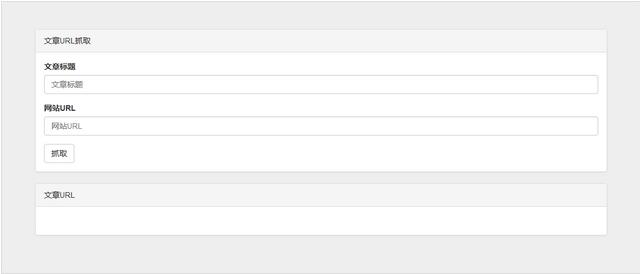
按照個人習慣,我首先要寫一個界面,理清下思路。
1、去不同網站。那麼我們需要一個url輸入框。
2、找特定關鍵字的文章。那麼我們需要一個文章標題輸入框。
3、獲取文章鏈接。那麼我們需要一個搜索結果的顯示容器。
<div class="jumbotron" id="mainJumbotron">
 <div class="panel panel-default">

  <div class="panel-heading">文章URL抓取</div>

  <div class="panel-body">
   <div class="form-group">
    <label for="article_title">文章標題</label>
    <input type="text" class="form-control" id="article_title" placeholder="文章標題">
   </div>
   <div class="form-group">
    <label for="website_url">網站URL</label>
    <input type="text" class="form-control" id="website_url" placeholder="網站URL">
   </div>

   <button type="submit" class="btn btn-default">抓取</button>
  </div>
 </div>
 <div class="panel panel-default">

  <div class="panel-heading">文章URL</div>

  <div class="panel-body">
   <h3></h3>
  </div>
 </div>
</div>
直接上代碼,然後加上自己的一些樣式調整,界面就完成啦:
那麼接下來就是功能的實現了,我用PHP來寫,首先第一步就是獲取網站的html代碼,獲取html代碼的方式也有很多,我就不一一介紹了,這裡用了curl來獲取,傳入網站url就能得到html代碼啦:
private function get_html($url){

 $ch = curl_init();

 $timeout = 10;

 curl_setopt($ch, CURLOPT_URL, $url);

 curl_setopt($ch, CURLOPT_RETURNTRANSFER, 1);

 curl_setopt($ch, CURLOPT_ENCODING, 'gzip');

 curl_setopt($ch, CURLOPT_USERAGENT, 'Mozilla/5.0 (Windows NT 6.1; WOW64) AppleWebKit/537.36 (KHTML, like Gecko) Chrome/34.0.1847.131 Safari/537.36');

 curl_setopt($ch, CURLOPT_CONNECTTIMEOUT, $timeout);

 $html = curl_exec($ch);

 return $html;

}
雖然得到了html代碼,但是很快你會遇到一個問題,那就是編碼問題,這可能讓你下一步的匹配無功而返,我們這裡統一把得到的html內容轉為utf8編碼:
$coding = mb_detect_encoding($html);

if ($coding != "UTF-8" || !mb_check_encoding($html, "UTF-8"))

 $html = mb_convert_encoding($html, 'utf-8', 'GBK,UTF-8,ASCII');
得到網站的html,要獲取文章的url,那麼下一步就是要匹配該網頁下的所有a標簽,需要用到正則表達式,經過多次測試,最終得到一個比較靠譜的正則表達式,不管a標簽下結構多復雜,只要是a標簽的都不放過:(最關鍵的一步)
$pattern = '|<a[^>]*>(.*)</a>|isU';

preg_match_all($pattern, $html, $matches);
匹配的結果在$matches中,它大概是這樣的一個多維素組:
array(2) {
 [0]=>
 array(*) {
  [0]=>
  string(*) "完整的a標簽"
  .
  .
  .
 }
 [1]=>
 array(*) {
  [0]=>
  string(*) "與上面下標相對應的a標簽中的內容"
 }
}
只要能得到這個數據,其他就完全可以操作啦,你可以遍歷這個素組,找到你想要a標簽,然後獲取a標簽相應的屬性,想怎麼操作就怎麼操作啦,下面推薦一個類,讓你更方便操作a標簽:
$dom = new DOMDocument();

@$dom->loadHTML($a);//$a是上面得到的一些a標簽

$url = new DOMXPath($dom);

$hrefs = $url->evaluate('//a');

for ($i = 0; $i < $hrefs->length; $i++) {

 $href = $hrefs->item($i);

 $url = $href->getAttribute('href'); //這裡獲取a標簽的href屬性

}
當然,這只是一種方式,你也可以通過正則表達式匹配你想要的信息,把數據玩出新花樣。
得到並匹配得出你想要的結果,下一步當然就是傳回前端將他們顯示出來啦,把接口寫好,然後前端用js獲取數據,用jquery動態添加內容顯示出來:
var website_url = '你的接口地址';
$.getJSON(website_url,function(data){
 if(data){
  if(data.text == ''){
   $('#article_url').html('<div><p>暫無該文章鏈接</p></div>');
   return;
  }
  var string = '';
  var list = data.text;
  for (var j in list) {
    var content = list[j].url_content;
    for (var i in content) {
     if (content[i].title != '') {
      string += '<div class="item">' +
       '<em>[<a href="http://' + list[j].website.web_url + '" target="_blank">' + list[j].website.web_name + '</a>]</em>' +
       '<a href=" ' + content[i].url + '" target="_blank" class="web_url">' + content[i].title + '</a>' +
       '</div>';
     }
    }
   }
  $('#article_url').html(string);
});
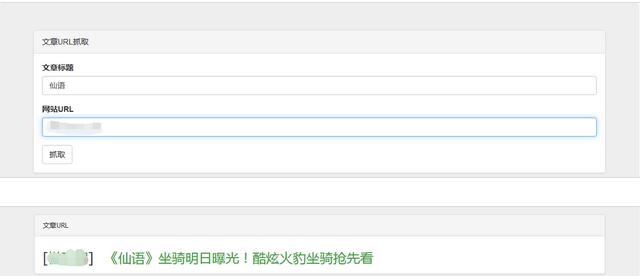
上最終效果圖:
以上就是本文的全部內容,希望對大家的學習有所幫助。